

It was Saul Alinsky in Rules for Radicals who wrote, “Do one of three things. One, go find a wailing wall and feel sorry for yourselves. Two, go psycho and start bombing—but this will only swing people to the right. Three, learn a lesson. Go home, organize, build power and at the next convention, you be the delegates.”[1]
It could be argued that, because we have limited our application of the Bible to heaven and or the next eschatological event, we have left a worldview vacuum that has been filled by those with a competing set of values, who, rightly, believe there is no such thing as neutrality. Dr. Gary North (1942-2022) had two impactful pieces of advice.
• You can’t beat something with nothing.
• You can’t change just one thing.
Jesus warned His disciples not to be led astray by traditions that have the effect of setting aside the commandments of God (Mark 7:9). Paul cautioned the “elders of the church” at Ephesus that after his departure “savage wolves will come in among you, not sparing the flock; and from among your own selves men will arise, speaking perverse things, to draw away the disciples after them” (Acts 20:17, 29-30). It’s no less true today than in John’s day that “many false prophets have gone out into the world” (1 John 4:1), many of whom “went out from us” (2:19), that is, from within the church community.
Jesus saved his harshest criticism for the religious leaders of Israel because they carried the weight of authority with their words (Matt. 21:23-46; 23:2-3; James 3:1). While a false doctrine has the outward appearance of orthodoxy, in terms of what the Bible tells us, it has a soft and oftentimes rotten core (Matt. 23:25-28) but is presented as Bible truth.
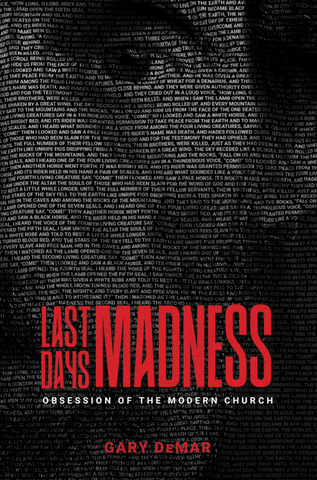
Last Days Madness
In this authoritative book, Gary DeMar clears the haze of "end-times" fever, shedding light on the most difficult and studied prophetic passages in the Bible, including Daniel 7:13-14; 9:24-27; Matt. 16:27-28; 24-25; Thess. 2; 2 Peter 3:3-13, and clearly explaining a host of other controversial topics.
Buy NowThe claim is often made by some well-meaning Christians that the world and the things in the world are off-limits to Christians; that the best way to live the Christian life is not to get involved in “the things of this world.” Holiness is defined as an escape from this world, if not physically through some cataclysmic eschatological event like a rapture,[2] then certainly by being separated from the affairs of this world by an unwillingness to acknowledge that God has made us stewards of His good creation, of which He demands an accounting (Matt. 25:14-30). In fact, His accounting has always taken place and continues to do so!
Instead of following the directive of Abraham Kuyper, who said, “There is not a square inch in the whole domain of our human existence over which Christ, who is Sovereign over all, does not cry, ‘Mine!,’”[3] Christians often claim, “there is not a square inch in the whole domain of our human existence over which Satan doesn’t say ‘Mine’” based on a terrible misreading of 2 Corinthians 4:4 that states “Satan is the god of this world.”[4] The same Paul who wrote that also wrote, “God will soon crush Satan under your feet” (Rom. 16:20), that is, the feet of that Apostolic generation. There were many antichrists in John’s day (1 John 2:18, 22). Antichrists were mostly non-believing Jewish religious leaders who rejected Jesus as the promised Messiah (2 John 7).
A popular metaphor for prophetic irrelevance is the sinking-Titanic theme. “This metaphor was made famous … by the 1950s radio preacher J. Vernon McGee, who warned his listeners with the rhetorical question, ‘Do you polish brass on a sinking ship?’ Apparently, McGee used the metaphor often, elsewhere referring to the ‘sinking ship of civilization.’”[5] Predicting the end has a long history that has made its way into popular culture, including Barry McGuire’s 1965 hit song “Eve of Destruction.” It seemed that way with the Cuban Missile Crisis in 1962, the assassination of President John F. Kennedy in 1963, and the ever-present threat of nuclear war with the former Soviet Union. Now it’s with Islam … again! The culmination of these world-changing events, among others, led Johnny Cash to perform “Matthew 24 (Is Knocking at the Door)” in 1973.
Matthew 24 is knocking at the door
And there can’t be too much more to come to pass,
Matthew 24 is knockin’ at the door
and today or one day more could be the last.
Eschatological ideas have consequences, and many Christians are beginning to understand how those ideas have shaped the cultural landscape. A world always on the precipice of some great and inevitable apocalyptic event is not in need of redemption but only of escape.
With what Hal Lindsey was claiming in his book The Late Great Planet Earth, the near demise of our world was visible for all to see, as Jeffrey Lamp points out.
Lindsey read certain political movements and crises as fulfillments of biblical prophecies. The emergence of Arab nations surrounding the state of Israel and their growing economic and military power were a constant threat to God’s chosen people. Moreover, Cold War tensions were a sign that the Soviet Union would become the great Gog and Magog that would attack Israel from the North (cf. Ezekiel 38-39) in the last days. China would be the great force from the East that would join the battle (cf. Revelation 9:16), and the European Economic Community, which would be a revived Roman Empire headed by the Anti-Christ (cf. Daniel 2:42), would attack from the west. The climactic battle would occur in the battle of Armageddon (cf. Revelation 16:13-16), where the Messiah would decisively crush these forces.[6]
Similar claims have been made for nearly two millennia. All generations believed their generation was the “terminal generation.”[7] The same Bible passages that Lindsey used to support his argument had been repeatedly used with the same amount of certainty.[8] Lamp concludes his article with, “I find Hal Lindsey’s exegesis and hermeneutic of reading current events through the lens of prophetic biblical passages specious, and the implications of his eschatology frankly dangerous.” Supposed prophetic inevitabilities can have disastrous results.
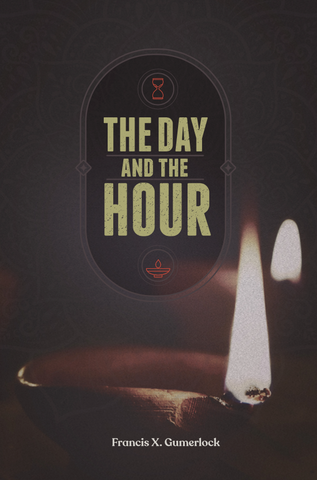
The Day and the Hour
In The Day and The Hour, Gumerlock spans two thousand years of conjecture on the last days, disclosing the dreams and delusions of those who believed that their sect was the 144,000 of Revelation 7; that the 1290 days of Daniel 12 had expired in their generation; that the "Man of Sin" of II Thessalonians 2 was reigning in their time; that a Rapture of the saints, a Great Tribulation, a Battle of Armageddon were just around the corner; or that a Millennial Kingdom was about to dawn.
Buy NowIn an interview published in the April 15, 1977, edition of Christianity Today, seven years after the publication of The Late Great Planet Earth and 11 years from the 1988 date when the rapture was to take place, Lindsey told W. Ward Gasque, “I don’t know how long a biblical generation is. Perhaps somewhere between sixty and eighty years. The state of Israel was established in 1948. There are a lot of world leaders who are pointing to the 1980s as being the time of some very momentous events. Perhaps it will be then. But I feel certain that it will take place before the year 2000.”
In that same 1977 interview, Gasque asked Lindsey: “But what if you’re wrong?” Lindsey replied: “Well, there’s just a split second’s difference between a hero and a bum. I didn’t ask to be a hero, but I guess I have become one in the Christian community. So I accept it. But if I’m wrong about this, I guess I’ll become a bum.”
Consider some of these statements by popular and influential prophecy writers. Pay attention to the dates of some of them.
• “What a way to live! With optimism, with anticipation, with excitement. We should be living like persons who don’t expect to be around much longer.”[9]
• “I don’t like clichés but I’ve heard it said, ‘God didn’t send me to clean the fish bowl, he sent me to fish.’ In a way there’s a truth to that.”[10]
• “The church is not in the business of taking anything away from Satan but the souls of men. The world is a sinking Titanic ripe for judgment, not Garden of Eden perfection.”
• “This world is not going to get any easier to live in. Almost unbelievably hard times lie ahead. Indeed, Jesus said that these coming days will be uniquely terrible. Nothing in all the previous history of the world can compare with what lies in store for mankind.”[11]
• “‘Reclaiming’ the culture is a pointless, futile exercise. I am convinced we are living in a post-Christian society — a civilization that exists under God’s judgment.”[12]
• “The [dispensational] premillennial position sees no obligation to make distinctly Christian laws.”[13]
Tom Sine offers a startling example of the effect “prophetic inevitability” can have on some people:
“Do you realize if we start feeding hungry people things won’t get worse, and if things don’t get worse, Jesus won’t come?” interrupted a coed during a Futures Inter-term I recently conducted at a northwest Christian college. Her tone of voice and her serious expression revealed she was utterly sincere. And unfortunately I have discovered the coed’s question doesn’t reflect an isolated viewpoint. Rather, it betrays a widespread misunderstanding of biblical eschatology … that seems to permeate much contemporary Christian consciousness. I believe this misunderstanding of God’s intentions for the human future is seriously undermining the effectiveness of the people of God in carrying out his mission in a world of need…. The response of the (student) … reflects what I call the Great Escape View of the future. So much of the popular prophetic literature has focused our attention morbidly on the dire, the dreadful, and the destruction of all that is.”[14]
Can you imagine what would have happened to the early church if this type of thinking had been promoted after the murders of Stephen at the hand of the soon-to-be apostle Paul (Acts 7:54–60), James the brother of John at the hand of Herod (Acts 12:1-3), the martyred saints in Revelation (Rev. 6:9-11; see 1:9; 2:10; 7:13-14), and the prophesied destruction of the temple and the judgment upon Israel before their generation passed away (Matt. 24-3, 34)?
Saul was converted on the Damascus Road, Herod was “struck by an angel,” “eaten by worms and breathed his last breath” (Acts 12:20-24), Nero committed suicide in AD 68, and the remnants of the Roman Empire are a tourist attraction today.
David Chilton describes how many Christians think about our time in terms of Bible prophecy, and it’s not very encouraging.
For too long, Christians have been characterized by despair, defeat, and retreat. For too long, Christians have heeded the false doctrine which teaches that we are doomed to failure, that Christians cannot win—the notion that, until Jesus returns, Christians will steadily lose ground to the enemy. The future of the Church, we were told, is to be a steady slide into apostasy. Some of our leaders sadly informed us that we are living in a “Laodicean age” of the Church (a reference to the “lukewarm” church of Laodicea, spoken of in Rev. 3:14-22). Any new outbreak of war, any rise in crime statistics, any new evidence of the breakdown of the family, was often oddly viewed as progress, a step forward toward the expected goal of the total collapse of civilization, a sign that Jesus might come to rescue us at any moment. Social action projects were looked on with skepticism: it was often assumed that anyone who actually tried to improve the world must not really believe the Bible, because the Bible taught that such efforts were bound to be futile.[15]
The sad thing is that millions of Christians believe that this is what the Bible teaches, and they act on those beliefs. Or, I should say, they don’t act on concerns related to civilization.
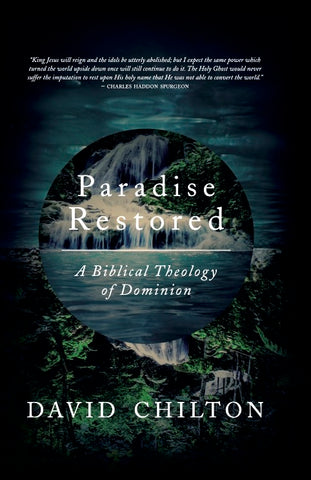
Paradise Restored: A Biblical Theology of Dominion
When it was first published three and a half decades ago, Paradise Restored helped to precipitate a massive paradigm shift in the Evangelical and Reformed world from abject pessimism to unabashed optimism. The reasons are simple enough: this classic work is forthrightly Biblical. It is masterfully written. It is pungently clear. And it is powerfully persuasive. This new edition is more useful than ever. Newly re-typeset with multiple indexes, it will help a whole new generation grasp how deep, how wide, how strong, and how certain is the finished work of redemption in Jesus Christ.
Buy Now[1] Saul D. Alinsky, Rules for Radicals: A Pragmatic Primer for Realistic Radicals (New York: Vintage Books, [1971] 1989), xxiii.
[2] See Gary DeMar with Francis Gumerlock, The Rapture and the Fig Tree Generation (2020), Last Days Madness: Obsession of the Modern Church, 4th ed. (Powder Springs, GA: American Vision, 1999), Left Behind: Separating Fact From Fiction, updated ed. (Powder Springs, GA: American Vision, 2023), and Wars and Rumors of Wars (2023).
[3] Abraham Kuyper, “Sphere Sovereignty,” in James D. Bratt, ed., Abraham Kuyper: A Centennial Reader (Grand Rapids: Eerdmans, 1998), 488.
[4] Literally it’s “god of this age” (aiōn and not kosmos).
[5] Joel McDurmon, “Do You Polish the Brass on a Sinking Ship?,” Free Republic (October 8, 2010): Link here.
[6] Jeffrey Lamp, “The Hal Lindsey Effect: Bob Dylan’s Eschatology,” Dylan Review, 3:1 (Summer, 2021): Link here.
[7] Hal Lindsey with C.C. Carlson, The Terminal Generation (Old Tappan, NJ: Fleming H. Revell Co., 1976 and Tim LaHaye, “Twelve Reasons Why This Could be The Terminal Generation,” When the Trumpet Sounds, eds. Thomas Ice and Timothy Demy (Eugene, OR: Harvest House, 1995), 428. Also see John M. Mulder, “A Review of Hal Lindsey’s The Terminal Generation,” Theology Today 33:4 (January 1977).
[8] Francis X. Gumerlock, The Day and the Hour: Christianity’s Perennial Fascination with Predicting the End of the World (Powder Springs, GA: American Vision, 2000).
[9] Hal Lindsey, The Late Great Planet Earth (Grand Rapids, MI: Zondervan, 1970), 145.
[10] An Interview with Hal Lindsey, “The Great Cosmic Countdown: Hal Lindsey on the Future,” Eternity (January 1977), 21.
[11] Charles C. Ryrie, The Living End (Old Tappan, NJ: Revell, 1976), 21.
[12] John F. MacArthur, The Vanishing Conscience: Drawing the Line in a No-Fault, Guilt-Free World (Dallas: Word, 1994), 12.
[13] Norman L. Geisler, “A Premillennial View of Law and Government,” Moody Monthly (October 1985), 129.
[14] Tom Sine, The Mustard Seed Conspiracy: You Can Make a Difference in Tomorrow’s Troubled World (Waco, TX: Word, 1981), 69.
[15] David Chilton, Paradise Restored: A Biblical Theology of Dominion (Dominion Press/American Vision, 1985), 3.