

In this second part of his recent interview on a Canadian television show, Gary continues the conversation by taking a closer look at the context of the New Testament.
What about world conditions? Aren’t we seeing prophecy being fulfilled right before our eyes? This protest is offered when people are hit with an interpretation that does not fit their long-held doctrinal views. They shift from the clear teaching of Scripture to current events. The Bible is then read through the lens of today’s newsprint, a form of “newspaper exegesis.” When current events change, somehow the clear teaching of the Bible on these subjects also changes. Few people ever take the time to check what prophecy “experts” wrote ten years earlier.
Our nation, and every nation, could go through the most tumultuous upheaval that history has ever experienced, and this still would not mean that Jesus was returning “in our generation.” For date setters, history is ignored and the Bible is twisted to fit a preconceived view of prophecy; the result is that the church experiences wild gyrations in the field of biblical prophecy. Last Days Madness was written to take a fresh look at the Bible. There is little that is new in the following pages. As you will read, the views expressed herein have been around for centuries. Unfortunately, they have been buried under millions of copies of paperback books that have assured us year after year that the end is near.
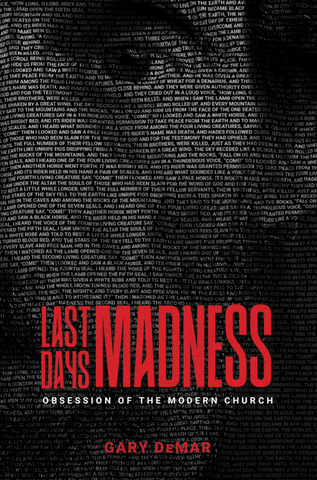
Last Days Madness
In this authoritative book, Gary DeMar clears the haze of "end-times" fever, shedding light on the most difficult and studied prophetic passages in the Bible, including Daniel 7:13-14; 9:24-27; Matt. 16:27-28; 24-25; Thess. 2; 2 Peter 3:3-13, and clearly explaining a host of other controversial topics.
Buy NowIn this second part of his recent interview on a Canadian television show, Gary continues the conversation by taking a closer look at the context of the New Testament. Being a Berean means questioning popular assumptions to “see if these things are so.” A careful and honest study must be made to determine whether the time markers in the New Testament point to a distant future—or to a fulfillment tied to the first-century audience.
Click here for today’s episode