
Please help us in end-of-year fundraising by contributing to this $15K Matching Grant!
Gary is interviewed by Rick Welch from The Burros of Berea podcast, about the amazing story of how America began through God’s providence and protection. (Part One of Two)
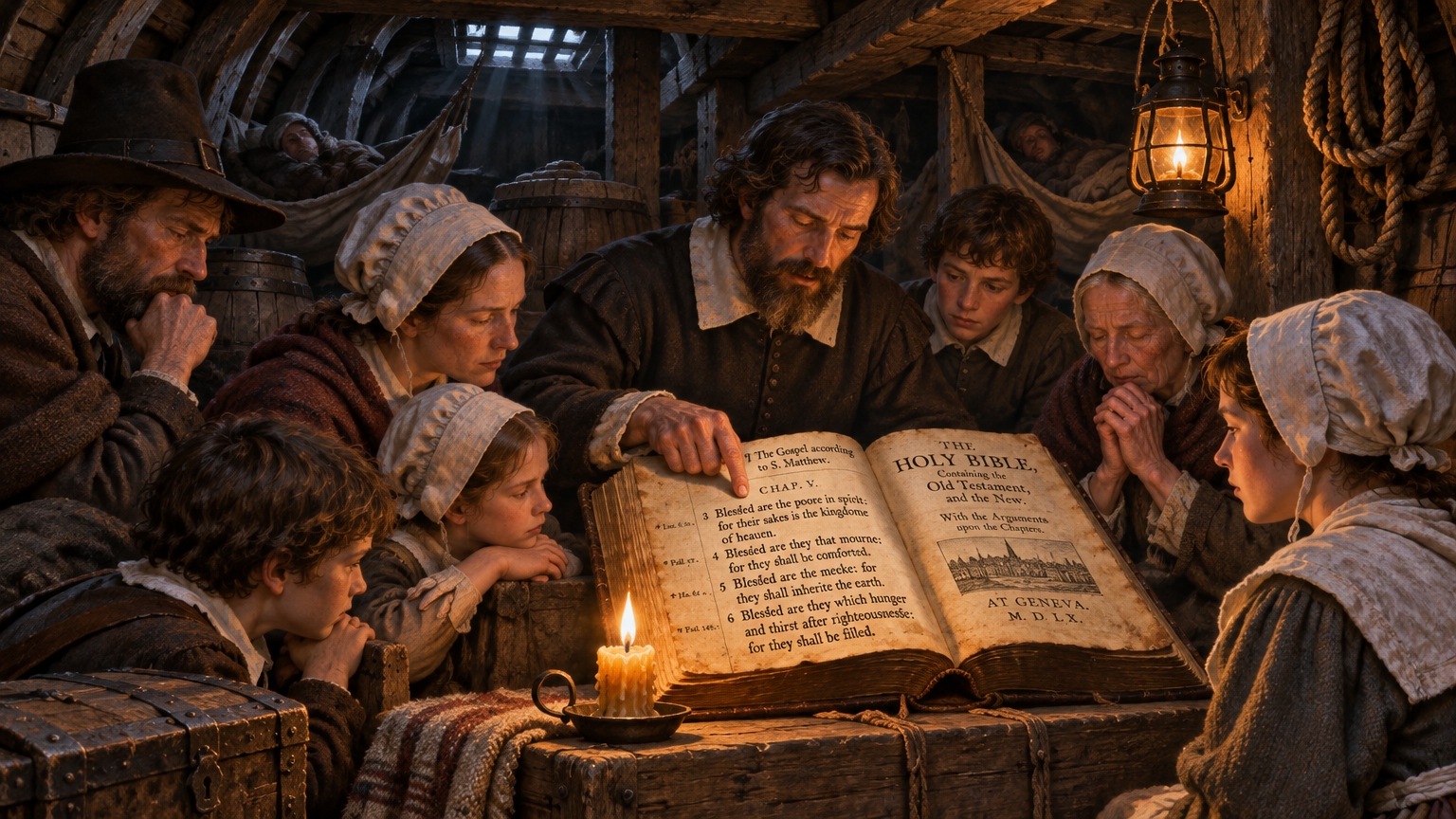
Knowing where to begin a study of a subject is often elusive. How far back do you go in history to say that it all begins here? In his book Meet You in Hell, a telling of the partnership and rivalry between steel magnates Andrew Carnegie and Henry Clay Frick, Les Standiford writes, “as is always the case when tracing history, there is no stopping anywhere, truly, for seeking out first causes is something like following the warp and weft [woof ] of an enormous knitted sweater. Pulling one string always bunches up another, and smoothing that only leads to the knot in the next….” The same is true for determining the actual starting point of America’s founding. Our nation begins, not in 1776, but more than one hundred and fifty years earlier.
A misconception is held by many that the drafting and signing of the Declaration of Independence was the beginning of our nation. Abraham Lincoln’s “Gettysburg Address” (Nov. 19, 1863) contributes to the confusion with the opening line: “Four score and seven years ago our fathers brought forth on this continent, a new nation, conceived in Liberty, and dedicated to the proposition that all men are created equal.”
While America was not a nation of united states at the time, she was a nation nonetheless. Thirteen colonies with independent governments and intact constitutions were operating in 1776. The 52 signers of the Declaration weren’t dropped from the sky in Philadelphia on July 2. The freshly printed document announced that the 13 American colonies, then at war with Great Britain, were now independent states and no longer part of the British Empire. The decision was not made lightly. Thomas Jefferson expressed the sentiments of most of his fellow Americans in a letter he had written in November of 1775 to John Randolph, who was in England at the time:
Believe me, dear Sir: there is not in the British empire a man who more cordially loves a union with Great Britain than I do. But, by the God that made me, I will cease to exist before I yield to a connection on such terms as the British Parliament propose[s]; and in this, I think I speak the sentiments of America.
In Jefferson’s mind, there was an America before its written Declaration of Independence. The political ideals of those who forged a more unified nation were not developed within a worldview vacuum. Since ideas have consequences, we should expect that the beliefs of the existing colonies would have an impact on the newly formed national government, and if not, then the individual states would retain them as they did. Sadly, however, the truth about our once robust Christian heritage is being steadily dismantled. The early colonies’ reliance on God’s providence is nothing more than a faded memory for most Americans.
If we are ever to restore what is about to be lost, we will need to learn the truth about our nation’s founding. A look at some of the earliest colonies is a good starting point.
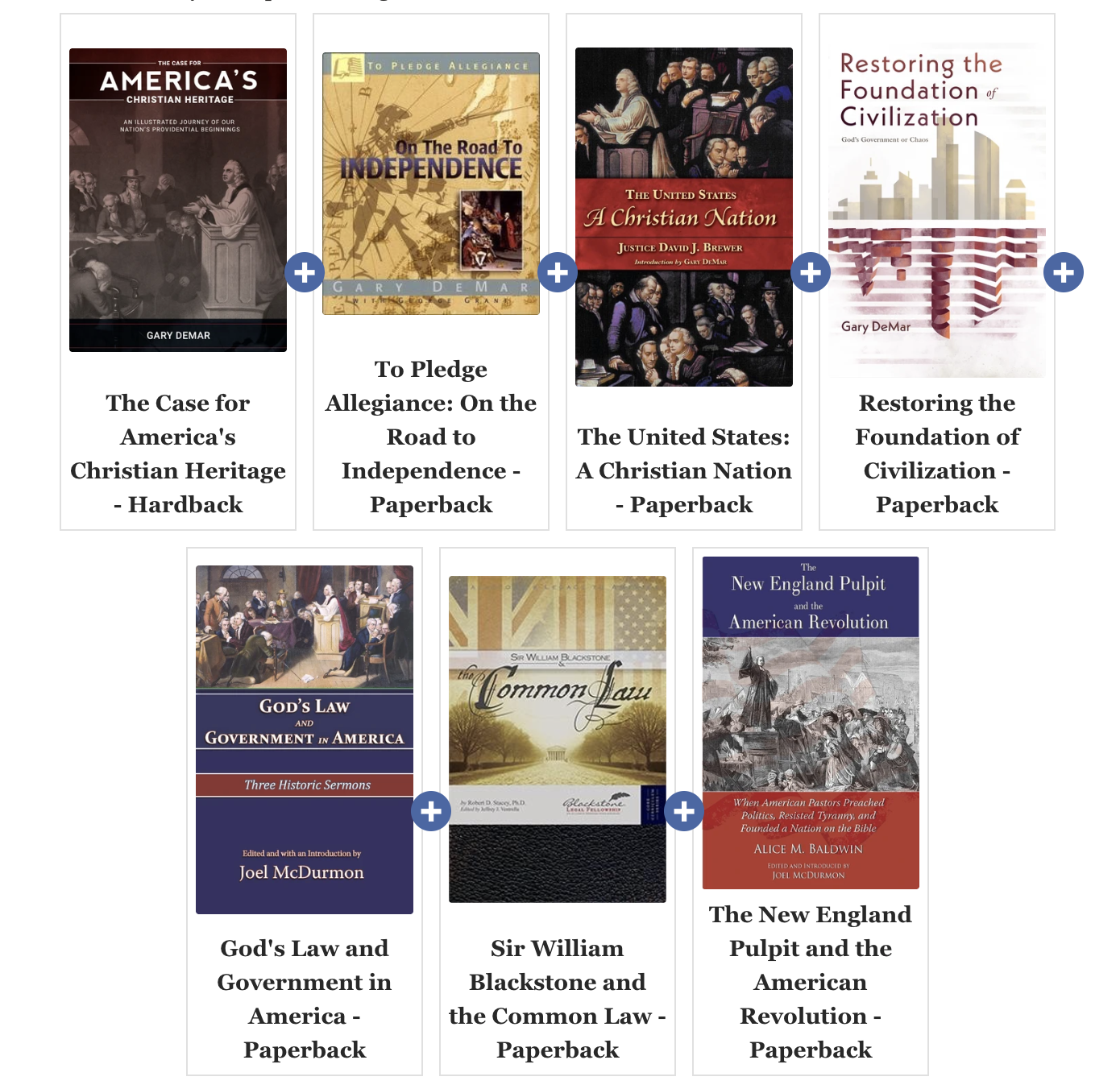
The Thanksgiving Mini-Library
For one week only, get Gary's full-color books The Case for America's Christian Heritage and On the Road to Independence, along with five other classics that refute the "secular founding of America" myth. These seven books are fascinating and informative and cover more than 300 years of America's providential history. More than $75 off the regular price for this incredible collection of books!
Buy NowGary is interviewed by Rick Welch from The Burros of Berea podcast. Rick read Gary’s book, The Case for America’s Christian Heritage, and wanted to talk about it and some of the interesting and important events and figures in American history. We can’t understand our current state until we understand where we have been as a nation.