

Gary is interviewed by UK Pastor Alex Gillan about biblical eschatology and fulfilled prophecy.
Hal Lindsey argued that Revelation was written in the form of an ancient code that needed a time machine to speed to the right prophetic era where the original Revelation symbols could be understood. “You might say,” Lindsey writes in There’s A New World Coming, “that John was put into a ‘divine time machine’ and transported nineteen hundred centuries into the future. Try to put yourself in his place. Suppose you were suddenly catapulted nineteen centuries into the future and confronted with the marvels of that time, then instructed to return to your own century and write what you had seen!”
But John was told, “Blessed is he who reads and those who hear the words of the prophecy and heed the things which are written in it; for the time is near” (Rev. 1:3). This verse indicates that the symbols and things signified were to be understood by Revelation’s first readers. How do we explain Lindsey’s “catapult” and “time machine” examples, when John was told “the time is near” (22:10), and that He was coming “quickly” (3:3, 11; 16:15; 22:7, 12, 20)? If we follow Lindsey’s methodology, the people who first read Revelation were confused because what they were reading didn’t line up with what they knew of their world. The people who read Revelation any time after the 19th century were also confused because the imagery was from an era long passed.
Revelation uses many Old Testament symbols: eating scrolls, beasts, marks on the forehead, gold, thrones, sun, moon, stars, candlesticks, Balaam, Jezebel, dragon, Gog and Magog, Sodom, Egypt, and Babylon. It’s unlikely that Old Testament references to people and places appeared either in John’s day, or will appear in their original form in our day or a time future to us. God uses them as a form of prophetic shorthand that those who were familiar with the Scriptures would have recognized but not always understood.
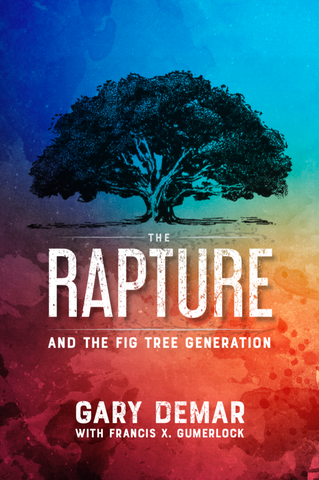
The Rapture and the Fig Tree Generation
For decades Christians have been enticed with the belief that they would be taken to heaven before a coming tribulation period in an event called the “rapture.” Since the national reestablishment of Israel in 1948, countless books and pamphlets have been written defending the doctrine assuring readers that it could happen at any moment. Some prophecy writers claimed the “rapture” would take place before 1988. We are far removed from that date. Where are we in God’s prophetic timetable?
Buy NowGary is interviewed by UK Pastor Alex Gillan about biblical eschatology and fulfilled prophecy. Gary points out that every Christian is a preterist of some kind, because their faith depends on events that Jesus fulfilled—in the past. Past fulfillment is not a strange addition to Christianity; the Christian faith is founded upon past events being fulfilled. (Part One of Two)