
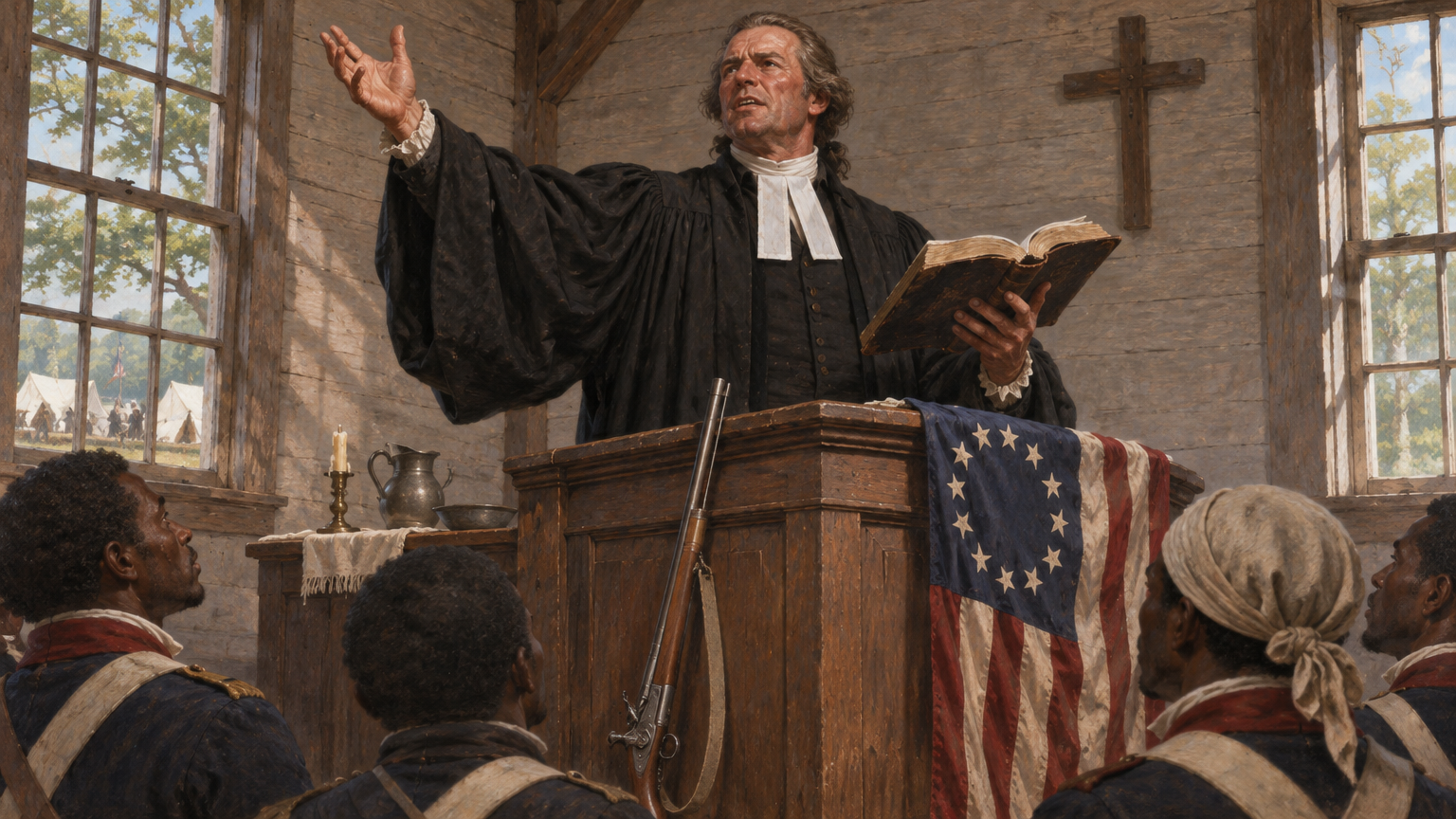
Gary emphasizes that the role of Christians in the political sphere is crucial for maintaining the proper authority and limitations of civil government.
The church is a government ordained by God. It has rulers (overseers/elders: 1 Tim. 3:1–7), members (flock: Acts 20:28), laws (goodness of God’s law: 1 Tim. 1:5–11), sanctions (“removed from your midst”: 1 Cor. 5:2), and a legacy (“the gates of Hades will not overpower it”: Matt. 16:18). When a dispute arises among Christians, Jesus said, “tell the church”:
If your brother sins against you, go and rebuke him in private. If he listens to you, you have won your brother. But if he won’t listen, take one or two others with you, so that by the testimony of two or three witnesses every fact may be established. If he doesn’t pay attention to them, tell the church. If he doesn’t pay attention even to the church, let him be like a Gentile and a tax collector to you. Truly I tell you, whatever you bind on earth will have been bound in heaven, and whatever you loose on earth will have been loosed in heaven (Matt. 18:15–18).
For too many Christians as well as politicians, the Church is viewed more as a voluntary association than a government. In biblical terms, however, the church is a government. When the phrase “separation of church and state” was used by John Calvin, Martin Luther, and other pre-constitutional theorists, it had the meaning of governmental or jurisdictional separation.
Like the family, the church is a divinely ordained institution. The State does not create the church and therefore cannot define it. The church is not a New Testament creation, contrary to what some theologians claim. The New Testament ekklēsia is an extension of the Old Testament ekklēsia (Acts 5:11). We learn from Acts 7:38 that the “church” (ekklēsia) was “in the wilderness.” The first church (ekklēsia) was in Jerusalem (8:1–3) and consisted mostly of Jews. The more accurate translation of ekklēsia is “congregation” or “assembly.”
The Old Testament church is not theologically distinct from the New Testament church when it comes to jurisdictional operation and separation.
Restoring the Foundation of Civilization
There are many Christians who will not participate in civilization-building efforts that include economics, journalism, politics, education, and science because they believe (or have been taught to believe) these areas of thought are outside the realm of what constitutes a Christian worldview. Nothing could be further from the truth.
Buy NowGary emphasizes that the role of Christians in the political sphere is crucial for maintaining the proper authority and limitations of civil government. He critiques the notion that the church’s fight is separate from political engagement, arguing that both realms are interconnected. The historical context of church involvement in politics shows how pastors should address political issues from a biblical perspective to guide their congregations effectively.