
In 1783, at the close of the war with Great Britain, a peace treaty was ratified that began with these words: “In the name of the Most Holy and Undivided Trinity. It having pleased the Divine Providence to dispose the hearts of the most serene and most potent Prince George the Third, by the Grace of God King of Great Britain.”[1] The treaty was signed by John Adams, Benjamin Franklin, and John Jay. Keep in mind that it was Adams who signed the 1797 Treaty of Tripoli.
In 1822, the United States, along with Great Britain and Ireland, ratified a “Convention for Indemnity Under Award of Emperor of Russia as to the True Construction of the First Article of the Treaty of December 24, 1814.”[2] It begins with the same words found in the Preamble to the 1783 treaty: “In the name of the Most Holy and Indivisible Trinity.” Only Christianity teaches a Trinitarian view of God. There doesn’t seem to be any reluctance on the part of the American signers to affix their names to it.
The Case for America's Christian Heritage
Even some of our nation’s Founders who did not identify as Christians could not escape the impact the Bible had on our nation’s founding and the moral precepts that held the fledgling nation together. America’s Christian heritage is writ large in its state Constitutions, charters, laws, symbols, and repeated stated reliance on the overruling providence of God.
Buy NowThe 1848 Treaty of Peace, Friendship, Limits and Settlement between the United States of America and the Mexican Republic, the peace treaty between the United States and Mexico that ended the Mexican-American War (1846-1848), begins with “In the name of Almighty God.” The treaty also states that both countries are “under the protection of Almighty God, the author of peace….”[3]
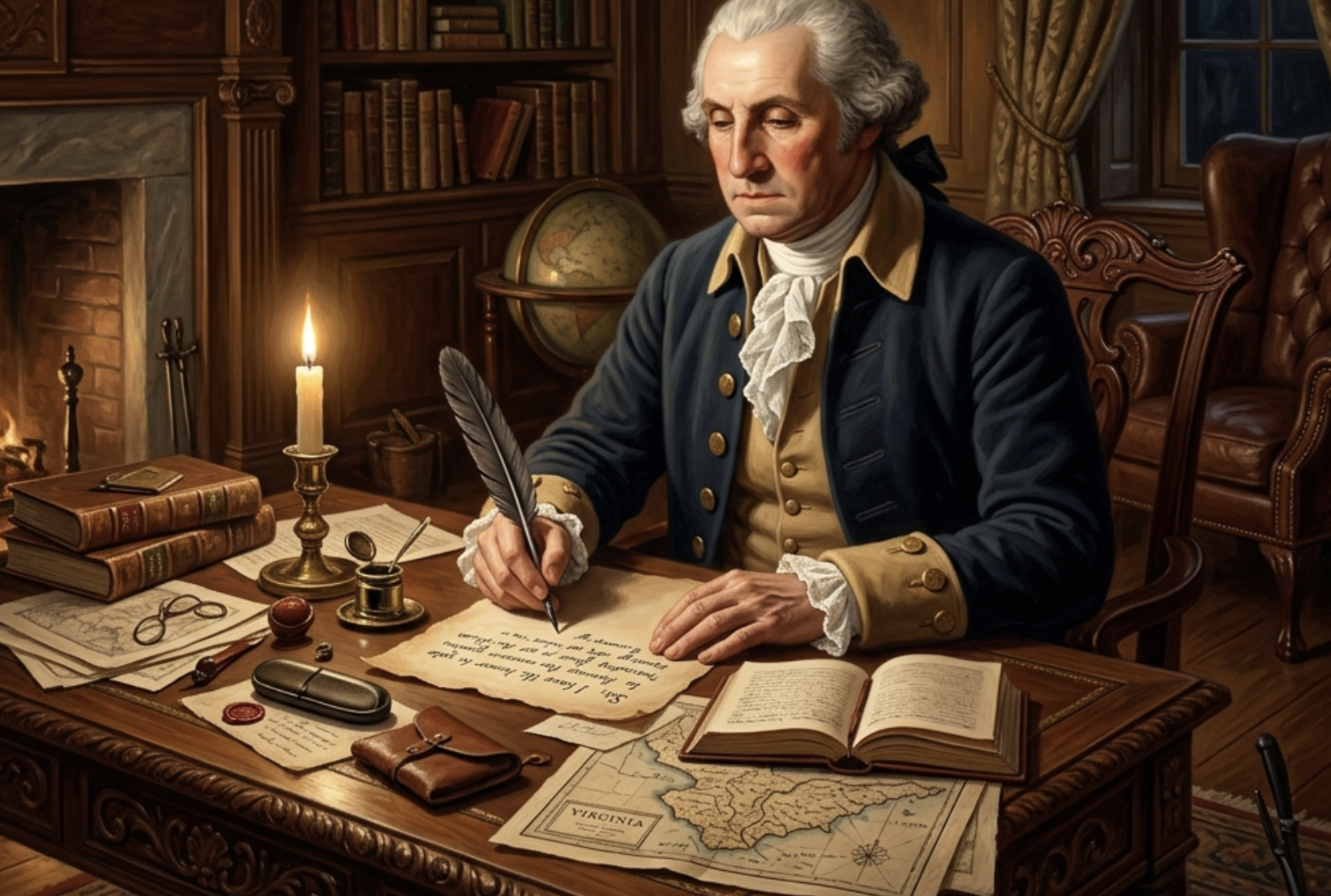
During the War for Independence, George Washington wrote the following to Brig. General Thomas Nelson:
“The Hand of providence has been so conspicuous in all this, that he must be worse than an infidel that lacks faith, and more than wicked, that has not gratitude enough to acknowledge his obligations.”[4]
As President, Washington stated that “it is the duty of all nations to acknowledge the providence of Almighty God, to obey His will, to be grateful for His benefits, and humbly to implore His protection and favor.” He went on in his Thanksgiving Proclamation of October 3, 1789, to write that as a nation “we may then unite in most humbly offering our prayers and supplications to the great Lord and Ruler of Nations, and beseech Him to pardon our national and other transgressions.”[5] Professor Stone’s contrary evidence is at best hearsay. Washington’s Thanksgiving Proclamation is direct evidence that he was no deist. When a person offers “prayers and supplication,” he expects some sort of response. There is no response possible for the deist who operates as an absentee landlord. In his Farewell Address of 1796, Washington stated the following:
Of all the dispositions and habits which lead to political prosperity, religion and morality are indispensable supports. In vain would that man claim the tribute of patriotism, who should labor to subvert these great pillars of human happiness, these firmest props of the duties of men and citizens. The mere politician, equally with the pious man, ought to respect and to cherish them. A volume could not trace all their connections with private and public felicity. Let it simply be asked: Where is the security for property, for reputation, for life, if the sense of religious obligation desert the oaths which are the instruments of investigation in courts of justice? And let us with caution indulge the supposition that morality can be maintained without religion. Whatever may be conceded to the influence of refined education on minds of peculiar structure, reason and experience both forbid us to expect that national morality can prevail in exclusion of religious principle.
Notice the connection between religion and morality, and how they lead to “political prosperity.” While noting that there are “slight shades of difference,” the people “have the same religion, manners, habits, and political principles.” This “same religion” was Christianity.
American Christian Rulers
Reprinted for the first time since 1890, this newly typeset edition of Rev. Edward J. Giddings’s biographies of nearly 200 American statesmen recalls a time in American history when the citizens of this republic made no distinction between the personal morality and public service of their leaders.
Buy Now[1] Malloy, Treaties, etc., 1:586.
[2] Malloy, Treaties, etc., 1:634.
[3] Malloy, Treaties, etc., 1:1107.
[4] George Washington’s letter of August 20, 1778, to Brig. General Thomas Nelson, in John C. Fitzpatrick, ed., The Writings of George Washington (Washington, D.C.: U.S. Government Printing Office, 1932), 12:343.
[5] George Washington, “Proclamation: A National Thanksgiving,” A Compilation of the Messages and Papers of the Presidents, 1789-1902, ed. John D. Richardson, 11 vols. (Washington, DC: Bureau of National Literature and Art, 1907), 1:64.