
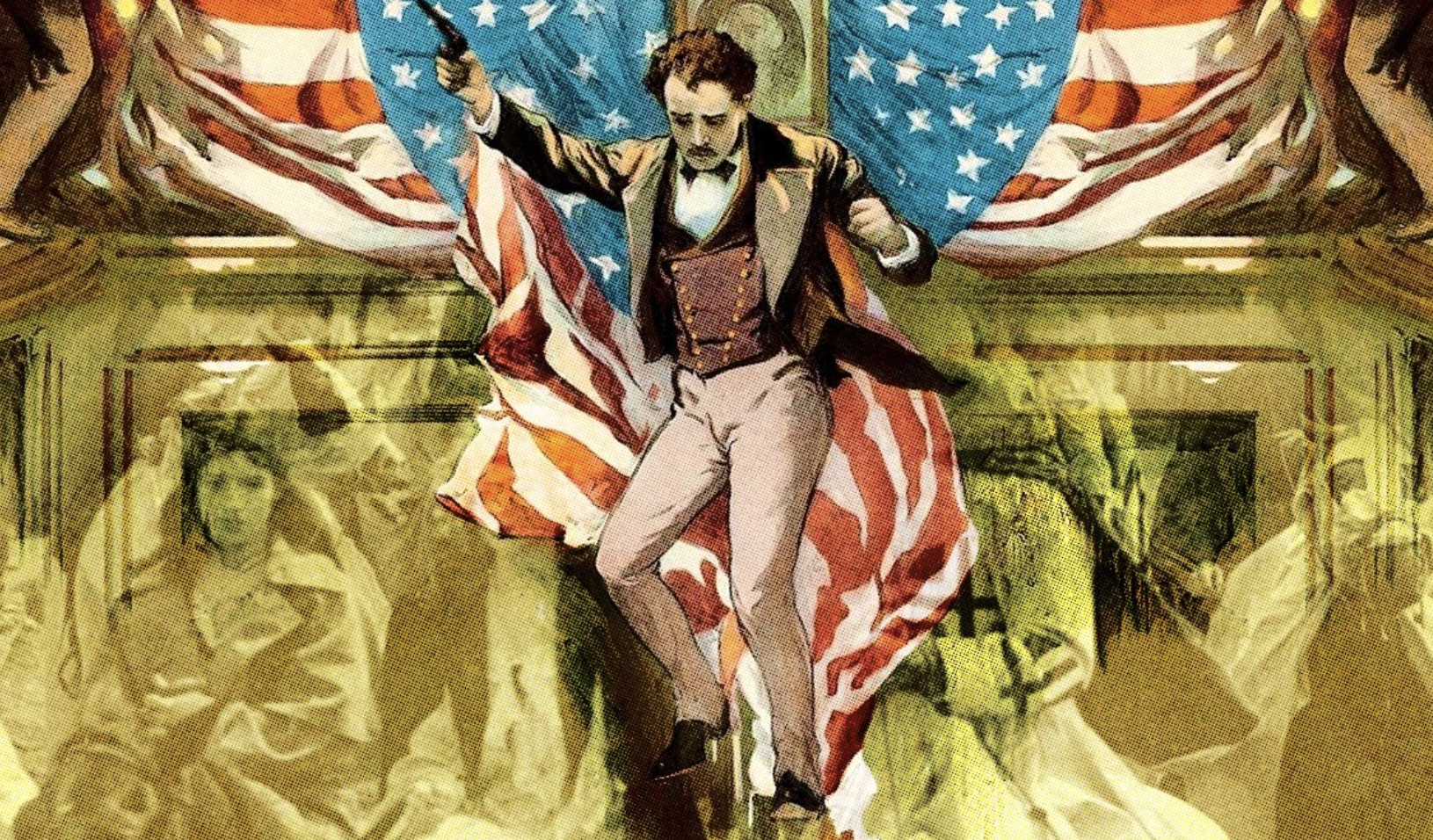
When you hear Leftists accuse conservatives of something, you can bet they are the ones doing it. Their accusations against others operate as cover for their own beliefs and actions. In the parable of the speck and the log in the New Testament, Jesus warned against what is described today as “projection.”[1]
“Do not judge, so that you will not be judged. For in the way you judge, you will be judged; and by your standard of measure, it will be measured to you. Why do you look at the speck that is in your brother’s eye, but do not notice the log that is in your own eye? Or how can you say to your brother, ‘Let me take the speck out of your eye,’ and look, the log is in your own eye? You hypocrite, first take the log out of your own eye, and then you will see clearly to take the speck out of your brother’s eye!’”
Fascism is a far-left authoritarian regime “characterized by dictatorial power, forcible suppression of opposition, and strong regimentation of society and the economy.” This definition fits the newly elected Democrat Party. Here’s what Jonah Goldberg says on the subject in his book Liberal Fascism (2007):
[Woodrow] Wilson revered [Germany’s Otto von] Bismarck as much as Teddy Roosevelt or any of the other progressives did…. Bismarck’s motive was to forestall demands for more democracy by giving people the sort of thing they might ask for at the polls. His top-down socialism was a Machiavellian masterstroke because it made the middle-class dependent upon the state. The middle class took away from this the lesson that enlightened government was not the product of democracy but an alternative…. As Wilson put it, the essence of progressivism was that the individual “marry his interests to the state.”[2]
The type of fascism that was promoted by these early American “Progressives” is what we might call today “smiley-face-fascism” in that there are no jack-booted thugs marching through the streets. Von Bismarck’s social policies are like what is promoted as policy today by legislative fiat and Executive Orders without any regard for the Constitution.
The antidote is transcendental. The solution is not found within our world, especially since Darwinism was adopted as the State religion. Stopping a runaway truck going down a steep grade when downshifting and the onboard brakes fail requires escape ramps like the 6% eastbound descent on Monteagle Mountain on I-24. The same is true of government. God’s Government is the braking mechanism.
God and Government
With a fresh new look, more images, an extensive subject and scripture index, and an updated bibliography, God and Government is ready to prepare a whole new generation to take on the political and religious battles confronting Christians today. May it be used in a new awakening of Christians in America—not just to inform minds, but to stimulate action and secure a better tomorrow for our posterity.
Buy NowThe Constitution must either be ignored or dismantled. “On the campaign trail in 1912, Wilson explained that ‘living political constitutions must be Darwinian in structure and in practice. Society is a living organism and must obey the laws of Life … it must develop.’”[3] This is the politics of “change,” a top-down power grab based on the political “science” of evolution. “All that progressives ask or desire,” Wilson argued, “is permission—in an era when ‘development,’ ‘evolution,’ is the scientific word—to interpret the constitution according to the Darwinian principle.”[4]
With God out of the way or redefined, man becomes the new god collectivized in the State. To use Hegel’s phrase, “the State is god walking on earth.” All the attributes of the God of the Bible are imputed to the State, including security. William L. Shirer, in The Rise and Fall of the Third Reich, writes that Bismarck’s policies gradually made the German people “value security over political freedom and caused them to see in the State, however conservative, a benefactor and a protector.”[5] Between 1883 and 1889, Bismarck put through a social security program far beyond anything known in other countries at the time. It included compulsory insurance for workers against old age, sickness, accident, and incapacity, and though the State organized it, employers and employees financed it. Sound familiar?
Hitler took full advantage of the German state of mind and Bismarck’s early progress in turning the nation into a model of socialist reform. Hitler remarks in Mein Kampf, “I studied Bismarck’s socialist legislation in its intention, struggle and success.”[6] It was Hitler’s social security policies and promises that got him elected to office.
Hitler was not alone in his admiration for Bismarck and what he accomplished. FDR borrowed Bismarck’s socialist agenda and created what is now known as the Social Security System. Bismarck said that “the State must take the matter in hand, since the State can most easily supply the requisite funds. It must provide them not as alms but in fulfillment of the workers’ right to look to the State where their own good will can achieve nothing more.”[7] Roosevelt and his admirers agreed. P. J. O’Brien, writing in Forward with Roosevelt, links Bismarck’s social policies with Roosevelt’s: “[The quotation by Bismarck] might have been lifted out of a speech by President Roosevelt in 1936, but the Iron Chancellor uttered it in 1871.”[8] This all took place just before Hitler’s rise.

The Unknown History of the 20th Century
Join Dr. North as he explores the key events and figures of the past century and the unknown social, political, ecclesiastical, cultural, even conspiratorial forces that have made America what it is today. Dr. North brings it all together, helping us understand where we have come from, where we are now, and where we should be heading as a nation.
Buy NowSome people understood the implications of what Roosevelt was attempting to do. “Roosevelt was branded as an agent of the Reds [Communists] for voicing similar opinions.”[9] The State became the savior of the people, and the social policies of the New Deal became holy writ.
There’s a massive confusion at the core of our politics. Against all evidence, everyone expects government to guarantee economic growth and higher living standards. It can’t. Even the New Deal failed to pull the nation out of the Depression. World War II did that by boosting factory production. But the expectation of government as economic miracle worker is deeply entrenched, and politicians pander to it. For the past three decades, presidents have used the language of economics to rationalize deficits and, in the process, reward their supporters.[10]
Coupled with military spending, government social programs expanded beyond anything FDR could have imagined. We are reaping the whirlwind of the massive interventionism of New Deal liberalism that even Conservatives are afraid to criticize for fear of being thrown out of office.
In Edward Bellamy’s widely read socialist fantasy novel Looking Backward, 2000-1887, a Rip Van Winkle character falls asleep in 1887 and awakens in 2000 to discover a changed world. His twenty-first-century companions explain to him how the utopia that astonishes him emerged in the 1930s from the hell of the 1880s. “That utopia involved the promise of security ‘from cradle to grave’—the first use of that phrase we have come across—as well as detailed government planning, including compulsory national service by all persons over an extended period.”[11] Bellamy’s fiction became much of the world’s reality in twentieth‑century socialism.
Bellamy believed that “human nature is naturally good and people are ‘god‑like in aspirations . . . with divinest impulses of tenderness and self‑sacrifice.’ Therefore, once external conditions are made acceptable, the Ten Commandments become ‘well‑nigh obsolete,’ bringing us a ‘second birth of the human race.’”[12] Bellamy managed to mix the perversions of socialism, secularism, and New Age philosophy into one impossible world.
Woodrow Wilson’s two political heroes were Abraham Lincoln and Otto Von Bismarck, although he dismissed Lincoln’s “Great Emancipator” ideal. The pro-Ku Klux Klan film Birth of a Nation (1915) was the first film shown in the White House during Wilson’s Democratic administration.[13]
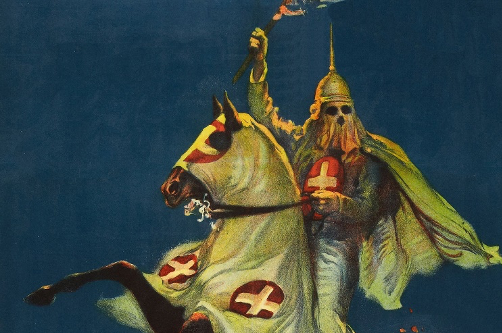
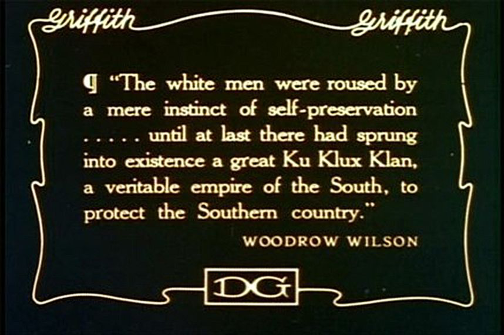
Wilson’s 1902 History of the American People, which praised the post-Civil War Ku Klux Klan, is quoted extensively throughout the film. Many of the film’s title cards were excerpts from Wilson’s book.
What Wilson admired about Lincoln was his “ability to impose his will on the entire country. Lincoln was a centralizer, a modernizer who used his power to forge a new, united nation…. Wilson admired Lincoln’s means—suspension of habeas corpus, the draft, and the campaigns of the radical Republicans after the war—far more than he liked his ends.”[14] Wilson “loved, craved, and in a sense glorified power.”[15] In the hands of good people, it is believed, power is incorruptible. In his book Congressional Government, Wilson admitted, “I cannot imagine power as a thing negative and not positive.”[16] Of course, he believed that with his good intentions, the use of unbridled power was a good thing for everyone. Power is often most dangerous in the hands of those who want to do “good,” because they believe their intentions to help the less fortunate are righteous and just.
In J. R. R. Tolkien’s The Lord of the Rings, the power of the ring is not something even good people should desire. The goal is to destroy it. When Boromir fails to resist the ring’s power, he dies. Even Gandalf and the elves shun the ring’s power. Tolkien is doubtful that any person can resist the temptation of absolute power promised by the ring, even if that power is used for good.
[1] Cynthia Vin Cynthia Vinney, “Projection as a Defense Mechanism,” VeryWellMind (May 10, 2024).
[2] Jonah Goldberg, Liberal Fascism: The Secret History of the American Left from Mussolini to the Politics of Meaning (New York: Random House, 2007), 96.
[3] Goldberg, Liberal Fascism, 88.
[4] Quoted in John G. West, Darwin’s Conservatives: The Misguided Quest (Seattle, WA: Center for Science and Culture, 2006), 61.
[5] William L. Shirer, The Rise and Fall of the Third Reich (New York: Simon and Schuster, 1960), 96, note.
[6] Shirer, The Rise and Fall of the Third Reich, 96, note.
[7] Quoted in P. J. O’Brien, Forward with Roosevelt (Chicago: John C. Winston Co., 1936), 84.
[8] O’Brien, Forward with Roosevelt, 85.
[9] O’Brien, Forward with Roosevelt, 85.
[10] Robert J. Samuelson, “Rhetoric Over Reality,” Newsweek (March 1, 1993), 31.
[11] Milton and Rose Friedman, Free to Choose (Harcourt Brace Jovanovich, 1980), 93.
[12] Herbert Schlossberg, Idols for Destruction: Christian Faith and Its Confrontation with American Society (Washington, DC: Regnery/Gateway, [1983] 1989), 190.
[13] “Three closely related events sparked a KKK resurgence in 1915: The film The Birth of a Nation was released, mythologizing and glorifying the first Klan. Leo Frank, a Jewish man accused of the rape and murder of a young white girl named Mary Phagan, was tried, convicted and lynched near Atlanta against a backdrop of media frenzy. The new Ku Klux Klan was founded in Atlanta with a new anti-immigrant, anti-Catholic, and anti-Semitic agenda. The bulk of the founders were from an Atlanta-area organization calling itself the Knights of Mary Phagan that had organized around the Frank trial. The new organization emulated the fictionalized version of the Klan presented in The Birth of a Nation.”
[14] Goldberg, Liberal Fascism, 84.
[15] Walter McDougall, Promised Land, Crusader State: The American Encounter with the World Since 1776 (Boston: Houghton Mifflin, 1997), 128. Quoted in Goldberg, Liberal Fascism, 84.
[16] Woodrow Wilson, Constitutional Government in the United States (New Brunswick, New Jersey: Transaction Publishers, [1908] 2002), 105–106.