
Bible Prophecy Under the Microscope-Episode 95
Gary responds to a video by John Bevere that makes several claims about the pretribulational rapture and what the early church believed about Bible prophecy.
History is important, but it is not authoritative. In terms of sola Scriptura, it does not matter what men of the past believed; the Bible is the standard. The argument is often made that some Church Fathers knew the apostle John or they knew someone who knew John, therefore the writings of these men carry a great deal of historical weight. Peter knew Jesus, and Peter needed a vision from heaven to inform him that his narrow understanding of the gospel’s application was wrong (Acts 10:9-23). Paul writes, “But when Cephas [Peter] came to Antioch, I opposed him to his face, because he stood condemned” because he would not eat with Gentiles (Gal. 2:11-21).
The writers of the New Testament continually corrected error in the Church (Rom. 16:17; Gal. 3:1; Eph. 2:16-19; 2 Thess. 2:2; 1 Tim. 1:3; 2 Tim. 2:16-18; etc.). John warns his readers not to “believe every spirit, but test the spirits to see whether they are from God” (1 John 4:1). Paul warns that “even though we, or an angel from heaven should preach” a gospel contrary to what had been preached, that angel was to be “accursed” (Gal. 1:8). What makes us think that those a hundred years removed could not also be in error on a complicated topic like Bible prophecy? The history of prophetic speculation has been a persistent embarrassment to the Church. From the first century to the present, writers of theology have been wrong in their interpretation and application of prophetic texts.
Proximity to an event does not assure future generations that past events have been reported or remembered accurately. Many people still believe that religious leaders in the fifteenth century taught that the earth was flat and Columbus wanted to prove it was round even though there is no evidence to substantiate this commonly held myth.
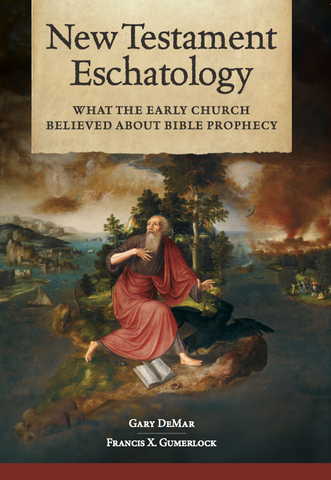
New Testament Eschatology: What the Early Church Believed About Bible Prophecy
It has been maintained by some modern writers that the early church was predominately premillennial and exclusively futuristic on Bible prophecy. While these claims have been made with certainty, there has always been a lack of clear historical documentation to support them. But since the futurist perspective has been promoted as an early church reality by so many for so long, few question it. New Testament Eschatology challenges this prevailing futurist view with a careful study of the historical record. The evidence shows that many early church writers understood the destruction of Jerusalem in AD 70 to be the end of the Old Covenant world.
Buy NowGary responds to a video by John Bevere that makes several claims about the pretribulational rapture and what the early church believed about Bible prophecy. Gary goes back to the text of the New Testament, specifically Matthew 24, to see what Jesus actually said about these things that were to come upon that first century generation.
Click here for today’s episode
Click here for all episodes of Bible Prophecy Under the Microscope