
Bible Prophecy Under the Microscope-Episode 80
Gary responds to a Facebook video by an individual claiming that the rapture and the end times are very “soon” to begin.
In terms of audience relevance related to a study of the Olivet Discourse, students of Scripture need to begin with Matthew 21:1 where we read that Jesus and some of His disciples had come “to the Mount of Olives.” By the time we get to chapter 23, Jesus is still in the vicinity of the Mount of Olives. It’s in Matthew 23 that Jesus tells His audience that their “house” is going to be left to them “desolate” (23:38).
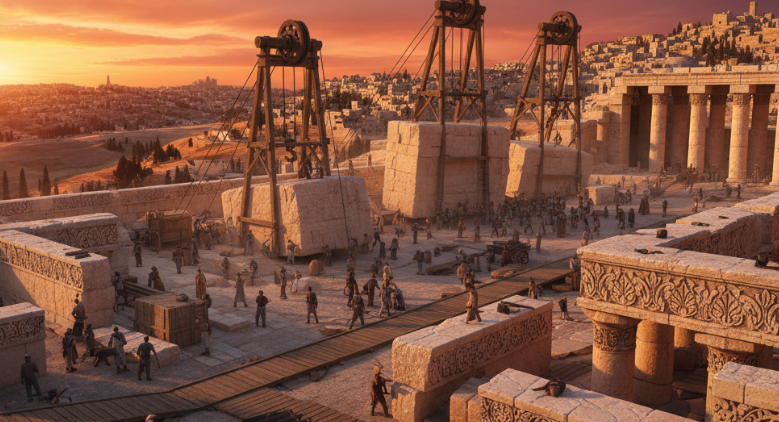
Jesus’ use of “house” is a reference to the temple that had been built after Israel returned from captivity and later had undergone reconstruction beginning in 19 BC by Herod the Great (John 2:19-20). Jesus was in the temple when He pronounced that the temple would be left to them desolate. We know this from what Matthew states in the following chapter.
Keep in mind that there were no chapter or verse divisions in the original manuscripts or their later copies: Jesus came out from the temple and was going away when His disciples came up to point out the temple buildings to Him. And He said to them, “Do you not see all these things? Truly I say to you, not one stone here will be left upon another, which will not be torn down” (Matt. 24:1-2).
It’s in Matthew 23:36 where the definition of “this generation” is confirmed to mean the generation—the people then living—to whom Jesus was speaking: “Truly I say to you, all these things will come upon this generation.” Notice the use of “these things” and “this generation.” We will see similar words in Matthew 24:33-34. “This generation” is a reference to that first-century generation, not ours. Even the original popular Scofield Reference Bible confirms that “The prediction of v. 36 [in Matt. 23] was fulfilled in the destruction of Jerusalem in A.D. 70.” The KJV Bible Commentary interprets “this generation” in the same way and adds an important qualification: “While some have attempted to relate ‘generation’ (Gr genea) to the race of the Jews, indicating the survival of their race until Christ’s return, this seems somewhat stretched.” The Scofield Reference Bible tries to stretch the meaning of genea to mean “race” with the following note:
Gr. genea, the primary definition of which is, “race, kind, family, stock, breed.” (So all lexicons.) That the word is used in this sense because none of “these things,” i.e. the world-wide preaching of the kingdom, the great tribulation, the return of the Lord in visible glory, and the regathering of the elect, occurred at the destruction of Jerusalem by Titus, A.D. 70. The promise is, therefore, that the generation—nation, or family of Israel—will be preserved unto “these things”; a promise wonderfully fulfilled to this day.
As we’ll see when we get to Matthew 24:34 in chapter 10 where “this generation” is used again by Jesus, genea never means “race.” In the New Testament, it always refers to the generation to whom Jesus was addressing. “All lexicons” do not agree with Scofield’s genea = “race” claim.

Wars and Rumors of Wars
A first-century interpretation of the Olivet Discourse was once common in commentaries and narrative-style books that describe the fall of Jerusalem in AD 70. There is also a history of skeptics who turn to Bible prophecy and claim Jesus was wrong about the timing of His coming at “the end of the age” and the signs associated with it. A mountain of scholarship shows that the prophecy given by Jesus was fulfilled in exacting detail when He said it would: before the generation of those to whom He was speaking passed away.
Buy NowGary responds to a Facebook video by an individual claiming that the rapture and the end times are very “soon” to begin. The video asks good questions, but seems to overlook the fact that the same audience Jesus is addressing in the first century is the same one that will see the things He discusses in Matthew 24.
Click here for today’s episode
Click here for all episodes of Bible Prophecy Under the Microscope