
Bible Prophecy Under the Microscope-Episode 76
Gary discusses Jesus’ statement in Matthew 23:35 about Zechariah, son of Berechiah.
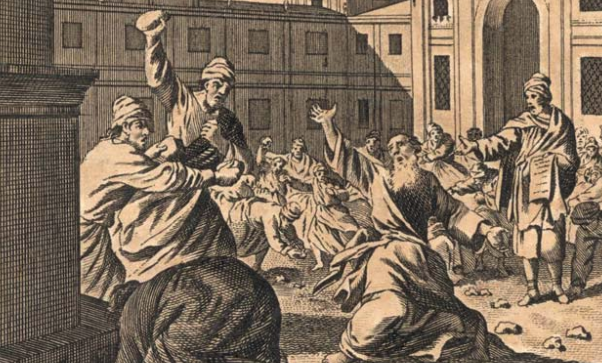
There is no record of the prophet Zechariah (Zech. 1:1) being murdered. Berechiah, like Zechariah, is a common name in the Bible (1 Chron. 3:20; 6:39; 9:16; 15:17; 15:23; 2 Chron. 28:12; Neh. 3:4, 30). Jesus says that it was this Zechariah who was murdered by some of those who were standing before Him. Why shouldn’t we believe Him? The difficulty disappears if we trust the text.
Jesus states that His present audience had a hand in killing someone named Zechariah, son of Berechiah. I trust Jesus more than I trust commentators who go to great lengths in an attempt to prove what they cannot prove and deny what is plainly stated.
An early tradition holds that Zechariah, son of Berechiah, was the father of John the Baptist. “[Protoevangelium of James] 23:3 (second century A.D.) has this Zechariah killed by Herod’s men ‘at the threshold of the Lord’s temple.’” Herod Antipas, “the tetrarch,” had John the Baptist murdered (Matt. 14:1-13; Mark 6:14-29). Like father, like son? It’s unlikely that Zechariah son of Berechiah was the father of John the Baptist since the fanciful Protoevangelium of James states that he was killed during the time of Herod’s murder of the innocents that took place 30 years before Jesus’ public ministry.
There are some historical events mentioned in the gospels that are not recorded elsewhere (e.g., Luke 13:1-5), so it wouldn’t be out of place for Jesus to mention an unrecorded event that was known to His present audience but not recorded in the gospels. In addition, killing a priest isn’t beyond the actions of the scribes and Pharisees considering that they wanted to kill a woman caught in adultery to bring a charge against Jesus that could result in His death (John 7:53-8:11). They even tried to kill Jesus on several occasions (Matt. 12:14; 26:4; Mark 9:31; 14:1; Luke 22:2; John 5:18; 7:1, 30; 11:53; Acts 2:23). A reading of the book of Acts will show a similar effort to kill their religious opposition. Stephen is a perfect example (Acts 7:54- 60), and so is Paul (14:19; 23:20-23; 2 Cor. 11:23-27; 2 Tim. 3:11). Notice how the death of James, the brother of John, “pleased the Jews” (12:3).

Wars and Rumors of Wars
A first-century interpretation of the Olivet Discourse was once common in commentaries and narrative-style books that describe the fall of Jerusalem in AD 70. There is also a history of skeptics who turn to Bible prophecy and claim Jesus was wrong about the timing of His coming at “the end of the age” and the signs associated with it. A mountain of scholarship shows that the prophecy given by Jesus was fulfilled in exacting detail when He said it would: before the generation of those to whom He was speaking passed away.
Buy NowGary discusses Jesus’ statement in Matthew 23:35 about Zechariah, son of Berechiah. There has been much speculation over the years about who is being spoken of here, especially since those listening to Jesus at the time were being accused of the crime.
Click here for today’s episode
Click here for all episodes of Bible Prophecy Under the Microscope