

Please help us in end-of-year fundraising by contributing to this $15K Matching Grant!
Bible Prophecy Under the Microscope-Episode 118
Gary disputes popular eschatological themes being currently promoted, particularly the “fig tree generation,” and critiques common misinterpretations of biblical prophecy regarding Israel.
What does the Bible say about the future of Israel as it relates to the question of Jerusalem’s prophetic significance? The Old Testament teaches that Israel was taken into captivity in two parts: first, the northern kingdom by the Assyrians in 722 BC, and then the southern kingdom by the Babylonians between 597 to 581 BC. God promised He would return Israel to the land after 70 years (Dan. 9:2; 2 Chron. 36:21; Ezra 1:1; Jer. 25:11, 12; 29:10; Zech. 7:5). They did return, the capital city of Jerusalem was reestablished, and the temple rebuilt (see the books of Ezra and Nehemiah).
Any promises in the Old Testament related to Israel returning to their land and rebuilding the temple were fulfilled in the post-exile period and continued with the ministry of Jesus Christ. The temple that Jesus said would be destroyed before their generation passed away (Matt. 24:34) was standing in Jesus’ day when He made the prediction (vv. 1–3).
Jesus said the following about the redemptive center of Jerusalem in His discussion with the Samaritan woman:
The woman said to Him, “Sir, I perceive that You are a prophet. Our fathers worshiped in this mountain, and you people say that in Jerusalem is the place where men ought to worship.” Jesus said to her, “Woman, believe Me, an hour is coming when neither in this mountain nor in Jerusalem will you worship the Father. You worship what you do not know; we worship what we know, for salvation is from the Jews. But an hour is coming, and now is, when the true worshipers will worship the Father in spirit and truth; for such people the Father seeks to be His worshipers” (John 4:19–24).
There are two Jerusalems mentioned in Scripture: earthly Jerusalem and heavenly Jerusalem:
Now this Hagar is Mount Sinai in Arabia and corresponds to the present Jerusalem [that was in existence when Paul wrote to the Galatians], for she is in slavery with her children. But the Jerusalem above is free; she is our mother (Gal. 4:25–26).
The New Testament doesn’t mention any change in the redemptive nature of these two Jerusalems as the book of Hebrews states:
But you have come to Mount Zion and to the city of the living God, the heavenly Jerusalem, and to myriads of angels, to the general assembly and church of the firstborn who are enrolled in heaven, and to God, the Judge of all, and to the spirits of the righteous made perfect, and to Jesus, the mediator of a new covenant, and to the sprinkled blood, which speaks better than the blood of Abel (Heb. 12:22–24; also Rev. 3:12–13; 21:2, 10).
The only Jerusalem that matters redemptively is the heavenly Jerusalem, a city that cannot be shaken. The only true “Mount Zion” is the heavenly one, not modern-day earthly Zion in Israel. The Jerusalem of today is no different from any other capital city in terms of biblical theology.
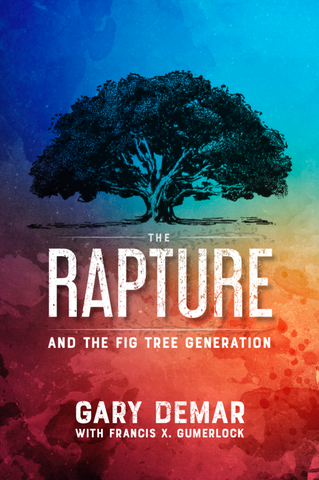
The Rapture and the Fig Tree Generation
For decades, Christians have been enticed with the belief that they would be taken to heaven before a coming tribulation period in an event called the “rapture.” Since the national reestablishment of Israel in 1948, countless books and pamphlets have been written defending the doctrine, assuring readers that it could happen at any moment. Some prophecy writers claimed the “rapture” would take place before 1988. We are far removed from that date. Where are we in God’s prophetic timetable?
Buy NowGary disputes popular eschatological themes being currently promoted, particularly the “fig tree generation,” and critiques common misinterpretations of biblical prophecy regarding Israel. He points out the importance of understanding the olive tree as a more accurate representation of Israel in biblical texts and expresses his willingness to engage in debates about these interpretations.