

Bible Prophecy Under the Microscope-Episode 107
Gary concludes his initial response to Ayo, who claims to have left preterism for dispensationalism.
John was a “fellow partaker in the tribulation and kingdom and perseverance in Jesus” (Rev. 1:9; see 2 Thess. 1:4). The church at Smyrna was experiencing a “tribulation” that Jesus knew about (Rev. 2:9). This tribulation period is in our past. The time words “near,” “shortly,” and “quickly” apply to that period of biblical history.
Does this mean that all tribulation is over for Christians? Not at all. Paul tells Timothy, “Indeed, all who desire to live godly in Christ Jesus will be persecuted” (2 Tim. 3:12). Jesus said something similar: “Remember the word that I said to you, ‘A slave is not greater than his master. If they persecuted Me, they will also persecute you’” (John 15:20) and “In the world you have tribulation but take courage; I have overcome the world” (16:33). We also read something similar in Acts, “Through many tribulations we must enter the kingdom of God” (Acts 14:22; cp. 2 Cor. 4:9-12).
Second, Paul makes the point that Israel’s past behavior (1 Cor. 10:1–10) was a lesson for believers in his day: “Now these things happened to them as an example, and they were written for our instruction, upon whom the ends of the ages have come” (10:11). The events described by Paul were in the past for him and the Corinthian church, but they had application for them hundreds of years later and to us. Stephen, in his defense before the Council, recounted something similar. He recounted Israel’s history and applied its lessons to that generation (Acts 7). Peter refers to the suffering of Jesus (a past event) as “an example for” them and us “to follow in His steps” (1 Peter 2:21).
In a comparable way, the writer of Hebrews briefly describes the “earthly sanctuary” (Heb. 9:1) and shows that “when Christ appeared as a high priest of the good things to come, He entered through the greater and more perfect tabernacle, not made with hands, that is to say, not of this creation; and not through the blood of goats and calves, but through His own blood, He entered the holy place once for all, having obtained eternal redemption” (9:11).
What was past (preterist) is “a symbol for the present time” (9:9) and applies to Christians throughout history. Jesus “does not need daily, like those high priests, to offer up sacrifices, first for His own sins and then for the sins of the people, because this He did once for all when He offered up Himself” (7:27). What Jesus did “once for all” has eternal significance even though that sacrifice is in the distant past.
Third, there are hundreds of prophecies about the first coming of Jesus that were fulfilled two millennia ago, and yet they have great relevance for us today. Everything has relevance no matter when it happened. The judgment that took place in AD 70 against Israel is past. The tribulation that took place in the years prior to the destruction of Jerusalem is in the past. The warnings to the seven churches in Revelation are in the past. The crucifixion, resurrection, and ascension of Jesus are in the past. There are hundreds of biblical events that are in the past that remain applicable for the church throughout history.
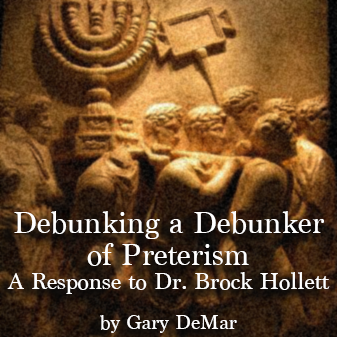
Debunking a Debunker of Preterism
Gary's response is an excellent introduction to the biblical theology of eschatology. Bible prophecy cannot be divorced from the rest of Scripture--it is a package deal. Localized and impending judgment language is all over the Bible--in both the Old and New Testaments--and an eschatology that seeks to interpret the Olivet Discourse and the book of Revelation in a different way is being dishonest with the biblical text.
Buy NowGary concludes his initial response to Ayo, who claims to have left preterism for dispensationalism. Gary discusses the biblical use of the term “antichrist” and defines what it actually means in the New Testament. Like Ayo, most people today assume it refers to a single person—the Antichrist—but in reality, antichrists were legion in the first century.
Click here for today’s episode
Click here for all episodes of Bible Prophecy Under the Microscope