

Bible Prophecy Under the Microscope-Episode 103
Gary answers a question he often receives about having conversations with dispensationalists.
One of the difficulties dispensationalists have in understanding the Messianic kingdom promised by the prophets is with regard to its fundamental nature. Several major misconceptions lead them astray in this regard. We highlight but three: they assert that the Messianic kingdom will (1) be a future, earthly, Armageddon-introduced, political system, (2) require the physical presence of Christ on earth, and (3) be fundamentally Jewish in purpose and character.
For instance, House and Ice write “that Christ will soon rapture his Bride, the church, and that we will return with him in victory to rule and exercise dominion with him for a thousand years upon the earth.” Emphatically this kingdom will not be “until Christ rules physically from Jerusalem.” A proper understanding of the Messianic kingdom requires “a consistent distinction between the Bible’s use of Israel and the church” that leads “dispensationalism to distinguish God’s program for Israel from his program for the church,” hence the Jewishness of the Messianic kingdom.
Despite House and Ice’s confusion, the Scripture is quite clear regarding the spiritual nature of the kingdom. It is a distinctive of dispensationalism that asserts Christ offered to Israel a literal, political, earthly kingdom, but that the Jews rejected it, thus causing its postponement. This view of the kingdom is totally erroneous. As a matter of fact, it was just that sort of kingdom that the first-century Jews wanted and that Christ refused: “When Jesus therefore perceived that they would come and take him by force, to make him a king, he departed again into a mountain himself alone” (John 6:15).
The disciples themselves missed His point for the most part, while He was on earth. This is evidenced in the Emmaus Road encounter after the crucifixion, where these disciples lament: “But we trusted that it had been he which should have redeemed Israel: and beside all this, to day is the third day since these things were done” (Luke 24:21). We should note that Jesus rebuked them for such foolishness: “Then he said unto them, 0 fools, and slow of heart to believe all that the prophets have spoken: Ought not Christ to have suffered these things, and to enter into his glory? And beginning at Moses and all the prophets, he expounded unto them in all the scriptures the things concerning himself” (Luke 24:25-27). They expected political deliverance and glory to come to Israel through this Messiah. But Jesus spoke to them of the true meaning of the prophecies of the Old Testament, showing them that He must suffer and then enter His resurrected, heavenly glory.
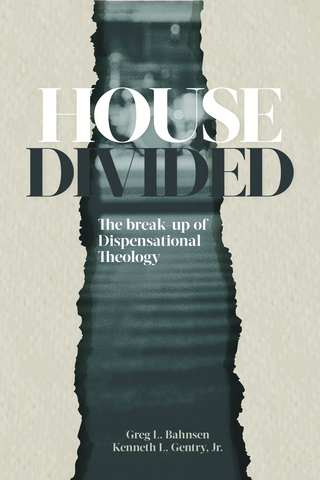
House Divided: The Break Up of Dispensational Theology
House Divided is a postmillennial book. It does not seek to fight something (dispensationalism) with nothing (amillennialism). You are not being asked to abandon hope in dispensationalism's escape hatch in the future (the pre-tribulation Rapture) only to take up residence in amillennialism's Fort Contraction, with a tribe of howling Darwinian Indians circling it, all armed with repeating rifles. You are being asked instead to join a victorious army led by Jesus Christ, who sits at God's right hand, and who will remain seated there until He subdues all His enemies under His feet.
Buy NowGary answers a question he often receives about having conversations with dispensationalists. It can almost feel like a language barrier, because they will hear the words of Scripture, but reinterpret them to mean something entirely different. Gary reveals a few questions that can be helpful in guiding the discussion.
Click here for today’s episode
Click here for all episodes of Bible Prophecy Under the Microscope